Guide to Gym Flooring Options
January 12, 2026
Choosing the right flooring is about more than just looks. The right surface impacts safety, durability, playability, and long-term cost. Before making a decision, you need to consider:
- Shock absorption – How well does it protect athletes from impact?
- Traction – Does it provide the right grip for quick movements?
- Ball bounce – How does it affect game play?
- Lifecycle cost – What will maintenance and replacement look like?
- Installation cost – What’s the upfront investment?
- Maintenance – How much time and money will it take to keep in top shape?
This guide breaks down the most common indoor sports flooring options, highlighting their pros, cons, and best-use cases.
Flooring Options You Should Avoid
Before diving into the best choices, let’s talk about what not to use. We’ve seen plenty of gym floors that weren’t built for sports, and the results were unsafe, unsanitary, or just plain impractical.
- VCT Tile – The cheapest option other than raw concrete, but it offers zero safety benefits.
- Carpet – Often used in elementary school gyms, but it holds bacteria, wears quickly, and provides no traction control.
If you’re investing in athletic flooring, choose a material that meets compliance and safety standards.
Hardwood Gym Floors – The Classic Choice
Best for: Competitive basketball, high school and college gyms, NBA/NCAA-level play.
Cost: Highest upfront and lifecycle cost.
Maintenance: High.
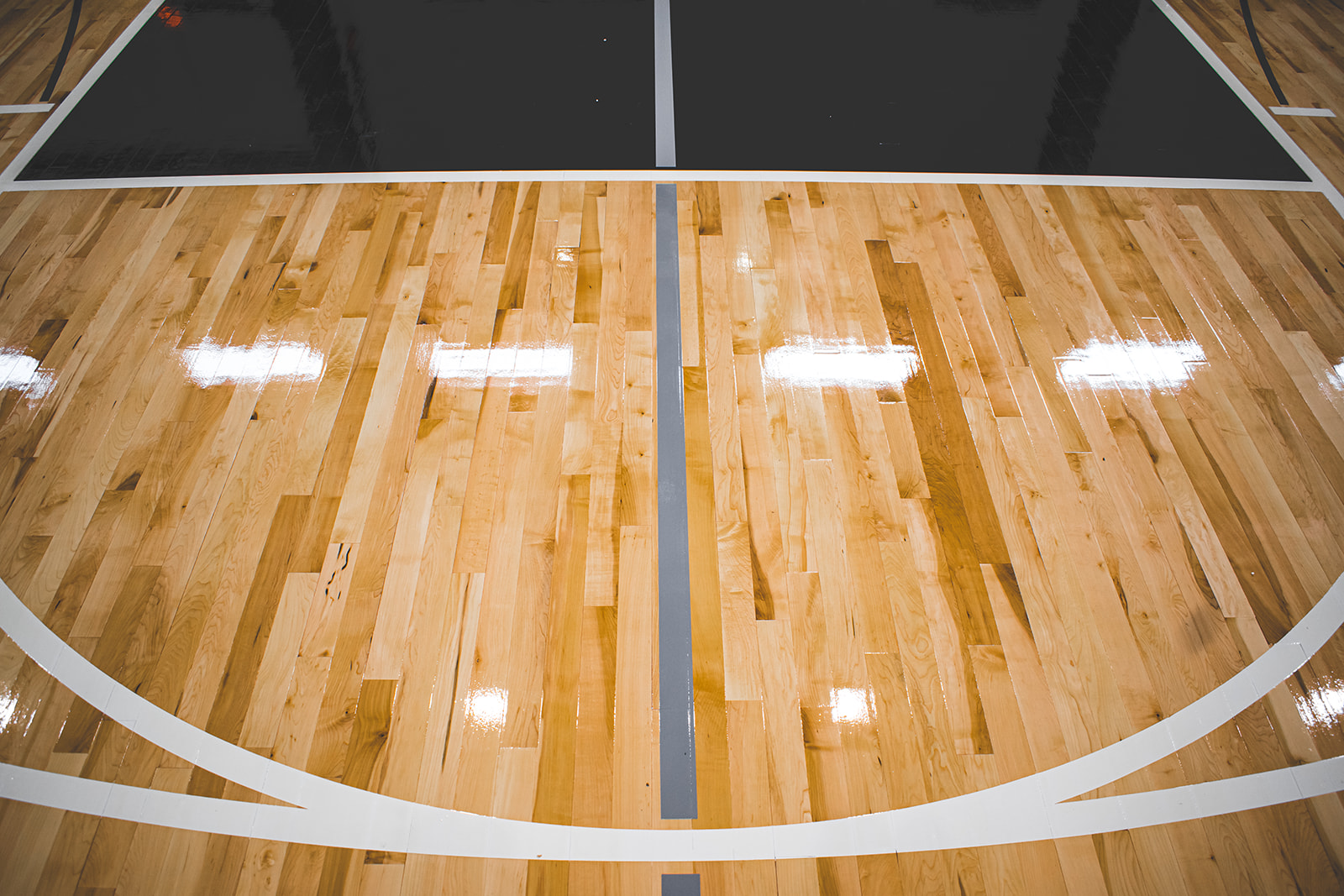
Hardwood is the gold standard for basketball and competitive indoor sports. If you walk into a high school, college, or professional court, it’s almost certainly a suspended hardwood floor.
Pros
- Traditional, high-end appearance.
- Excellent shock absorption.
- Durable with proper maintenance.
- Ideal ball response and traction.
Cons
- Expensive to install and maintain.
- Requires controlled humidity to prevent warping.
- Needs refinishing every one to five years, costing anywhere from $2,000 to $20,000 depending on the size of the facility.
- High long-term costs.
If budget isn’t an issue and the facility has the right HVAC conditions, hardwood is the best option.
Vinyl Gym Floors – A Multi-Purpose Option
Best for: Volleyball, multi-use gyms, cafeterias.
Cost: Moderate upfront, higher replacement cost.
Maintenance: Medium.
Vinyl floors come in large rolls and are adhered directly to concrete. They offer good shock absorption and are often used for volleyball and mixed-use spaces.
Pros
- Lower upfront cost than wood.
- Good traction when properly cleaned.
- Available in multiple colors and thicknesses.
- Excellent shock absorption when installed over a padded subfloor.
Cons
- Vulnerable to moisture, which can cause bubbling and cracking.
- Cannot be refinished like wood—must be completely removed and replaced.
- Too clean and it becomes sticky, too dirty and it becomes slick, making maintenance critical.
- Lacks the natural playability of wood, which can lead to a higher risk of injury.
Vinyl can be a cost-effective alternative for multi-use facilities but requires diligent maintenance.
Poured Urethane & Pad-and-Pour Floors – Seamless but Limited
Best for: Elementary schools, cafetoriums, low-impact spaces.
Cost: Varies by thickness and underlayment.
Maintenance: Low.
These synthetic floors are poured directly onto concrete, creating a seamless surface. Some versions include a rubber underlayer (pad-and-pour) for extra cushion.
Pros
- Seamless and easy to clean.
- Decent shock absorption with padding.
- Available in multiple thicknesses.
Cons
- Too much grip can increase injury risk.
- Hard on joints for fast, high-impact sports.
- Not accepted for high school, college, or pro-level play.
Poured urethane is a solid choice for elementary schools or cafetoriums but not for high-performance sports.
Modular Sports Flooring – The Low-Maintenance Champion
Best for: Basketball, volleyball, rec centers, gyms without climate control.
Cost: Moderate upfront, lowest lifecycle cost.
Maintenance: Low.
Modular flooring, like Sport Court’s Response Maple Select, is a highly durable, interlocking tile system designed for indoor sports. It’s trusted by USA Volleyball, NCAA, and countless facilities worldwide.
Pros
- Not affected by moisture—ideal for gyms without climate control.
- Provides both vertical and lateral shock absorption, reducing injury risk.
- Fast installation—typically completed in two to four days.
- Low maintenance and long lifespan—no refinishing required.
- Portable—can be moved or resold if needed.
Cons
- Ball bounce sounds different than wood, though response is the same.
- Can build static electricity if not maintained properly.
- Not ideal for heavy rolling loads like bleachers or equipment carts without reinforcement.
For facilities looking for a cost-effective, high-performance alternative to wood, modular flooring offers the best balance of safety, durability, and long-term value.
Final Recommendations
If you’re looking for the best indoor sports flooring, here’s how the options compare:
- If playability is the top priority and budget isn’t a concern, hardwood is the best option.
- If a cost-effective multi-purpose floor is needed, vinyl can work but requires careful maintenance.
- If outfitting a school gym or cafetorium, poured urethane offers a seamless, low-maintenance surface.
- If long-term value, low maintenance, and durability are key, modular flooring is the best choice.
At For the Win!, we specialize in modular athletic flooring that delivers premium performance without the premium price tag. If you have questions about finding the right floor for your facility, reach out—we’d love to help.
Other Resorces
Choosing the Perfect Lighting for your Gymnasium
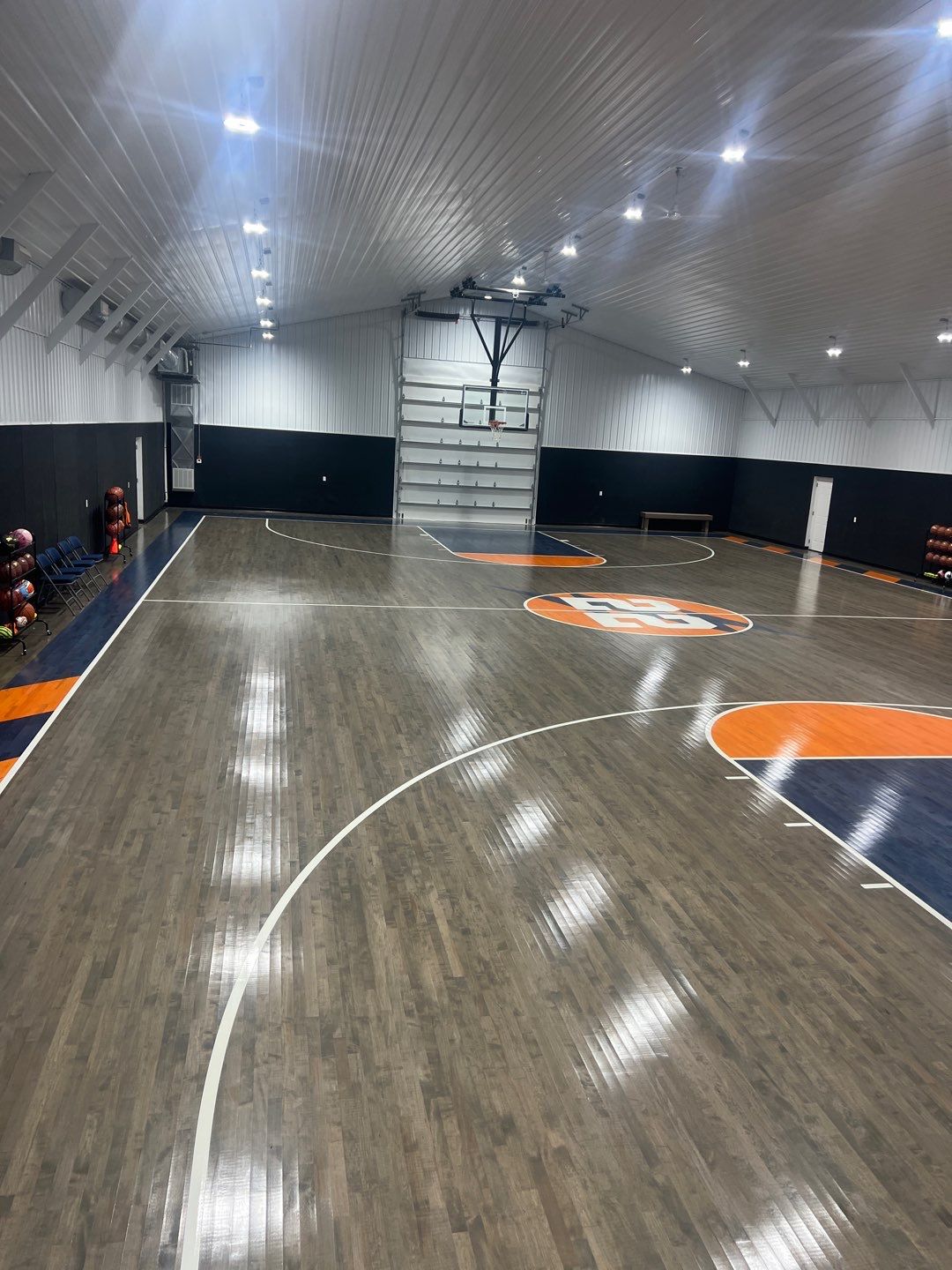
Choosing and Pricing lighting choices for gymnasiums, big and small
Pickleball Surfaces - Which is right for me?
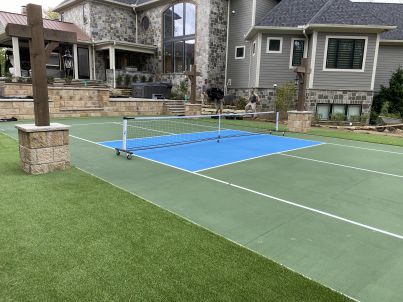
A "new" sport, super particular players, and so many surfaces to choose from. What is the difference between all the options?

Does Adding a Backyard Court Add Value to My Home
The Hidden ROI of Backyard Courts: What Builders and Homeowners Need to Know
Why Wait?
Build your dream court today